Can Your Anonymous Texting App Survive Phone Theft?
Users either don’t think much about choosing an anonymous texting app, or their first assumption about digital security is, “If messages are encrypted, users are safe.”
But the real question is not whether encryption exists. It is whether it still protects when real-world threats appear?
Users do not experience “encryption failure” in theory, nor do they understand such technicalities regarding Secure Communication. However, they can experience stolen phones, compromised Wi-Fi networks, leaked identities, forced login attempts, and silent background access, etc. These are practical, unpredictable situations that can happen.
Then what?
Can an app protect data security and privacy when it is no longer with the authorized user?
A stolen phone does not negotiate with encryption. A forced login does not respect security or privacy policy. A compromised session does not announce itself.
Identity does not wait for permission or online security, access does not always break in loudly, and messages don’t stay private just because they were encrypted once. In real conditions, security implementation is a continuous process for any possible situation.
This is where traditional messaging systems often reach their limits in handling adversarial real-world conditions. xPal, the safest messaging app on the other side, does not rely on a single layer of protection, data security, or privacy.
Instead, it uses multiple independent systems that work together when something goes wrong. Identity, session, device, network, and data handling are all treated as separate layers of defense, so no single point can be fully trusted on its own.
How Do Attacks Really Happen?
To understand Secure Communication of xPal, it helps more to look at how real attacks work in real life instead of only thinking about encryption or online security.
- Most attackers do not start by trying to break encryption. They move through more easily accessible targets:
- First, the user is identified (identity exposure)
- Next, access to the device or active session is targeted (session takeover)
- Then, usage patterns and communication behavior are observed (activity tracking)
- After that, long-term access is attempted (persistent access)
- Over time, a behavioral profile is slowly built (behavior mapping)
Comparing xPal Threat Management with Other Apps
| Layer / Threat | Telegram | Signal | Threema | xPal | |
|---|---|---|---|---|---|
| Identity Requirement | Phone number | Phone/username | Phone number | ID-based | xID (no phone/email) |
| Social Graph Linking | High | High | Medium | Medium | Low dependency |
| Metadata Exposure | Medium | High | Low | Low | Reduced linkage model |
| Message Storage | Device/Cloud | Cloud + Device | Device only | Device only | User-controlled lifecycle |
| Message Expiry Control | Basic | Basic | Limited | Limited | Flicker™ + Terminate™ |
| Lost Device Risk | High | High | Medium | Medium | Remote Wipeout™ layer |
| Offline Access Risk | High | High | Medium | Medium | Offline Lock™ |
| Identity Traceability | High | High | Medium | Medium | Reduced via xID |
How xPal, an Anonymous Texting App, Handles Real-World Privacy Threats?
| Attack Step | What Happens in Normal Apps | How xPal Changes It |
|---|---|---|
| Step 1: Finding You | Your account is linked to a phone or email, easy to identify | You use a 9-digit xID™, no phone or email needed |
| Step 2: Trying to Log In | OTP or password is enough to try to access | No simple login path, identity is harder to target |
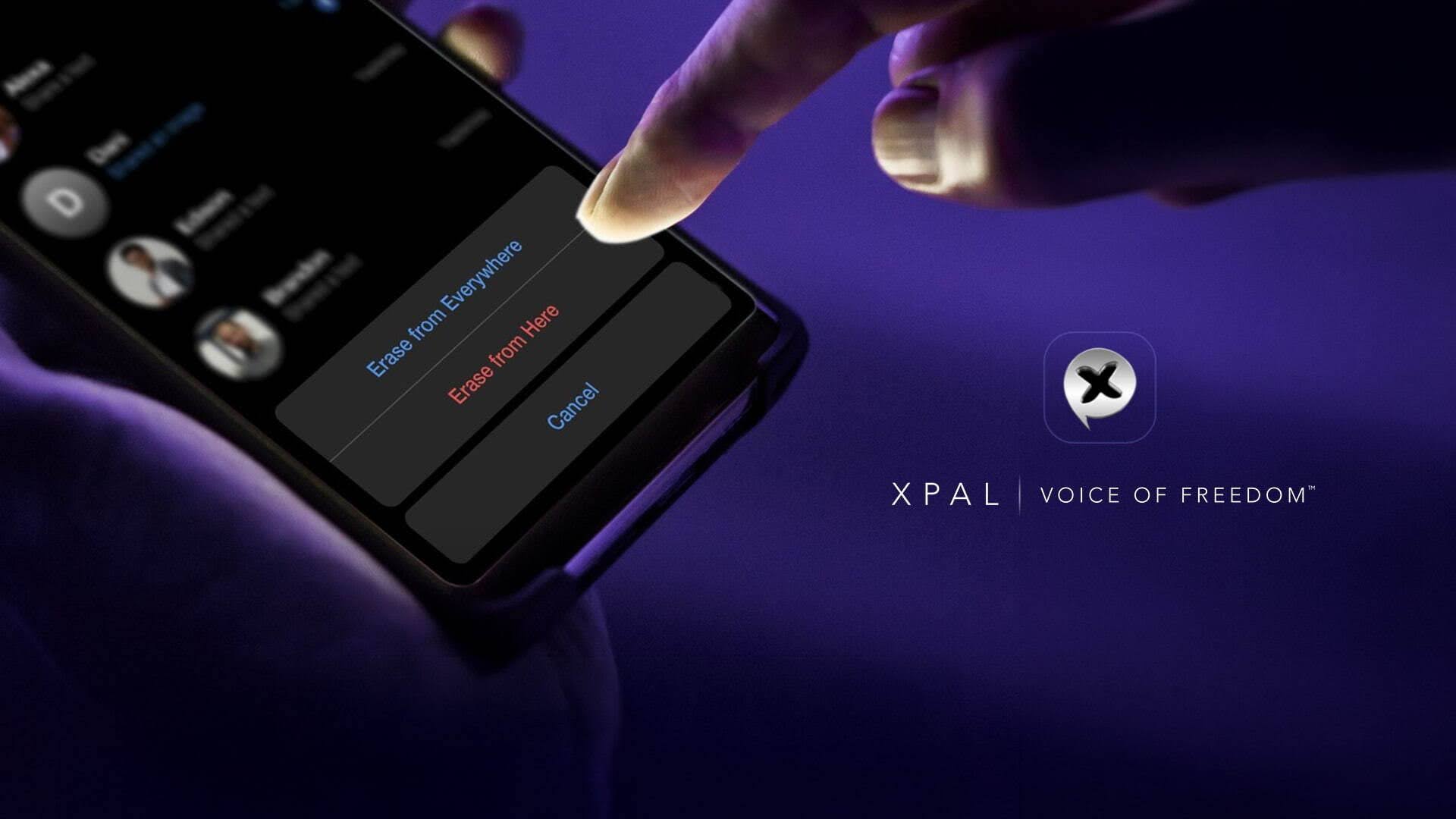
| Step 3: Phone Stolen | Chats and data may still be accessible | Remote Wipeout deletes all data |
| Step 4: Opening the App | If unlocked, everything is visible | Offline Lock™ blocks access |
| Step 5: Forcing Access | Attacker tries PIN/password | Decoy PIN shows fake data |
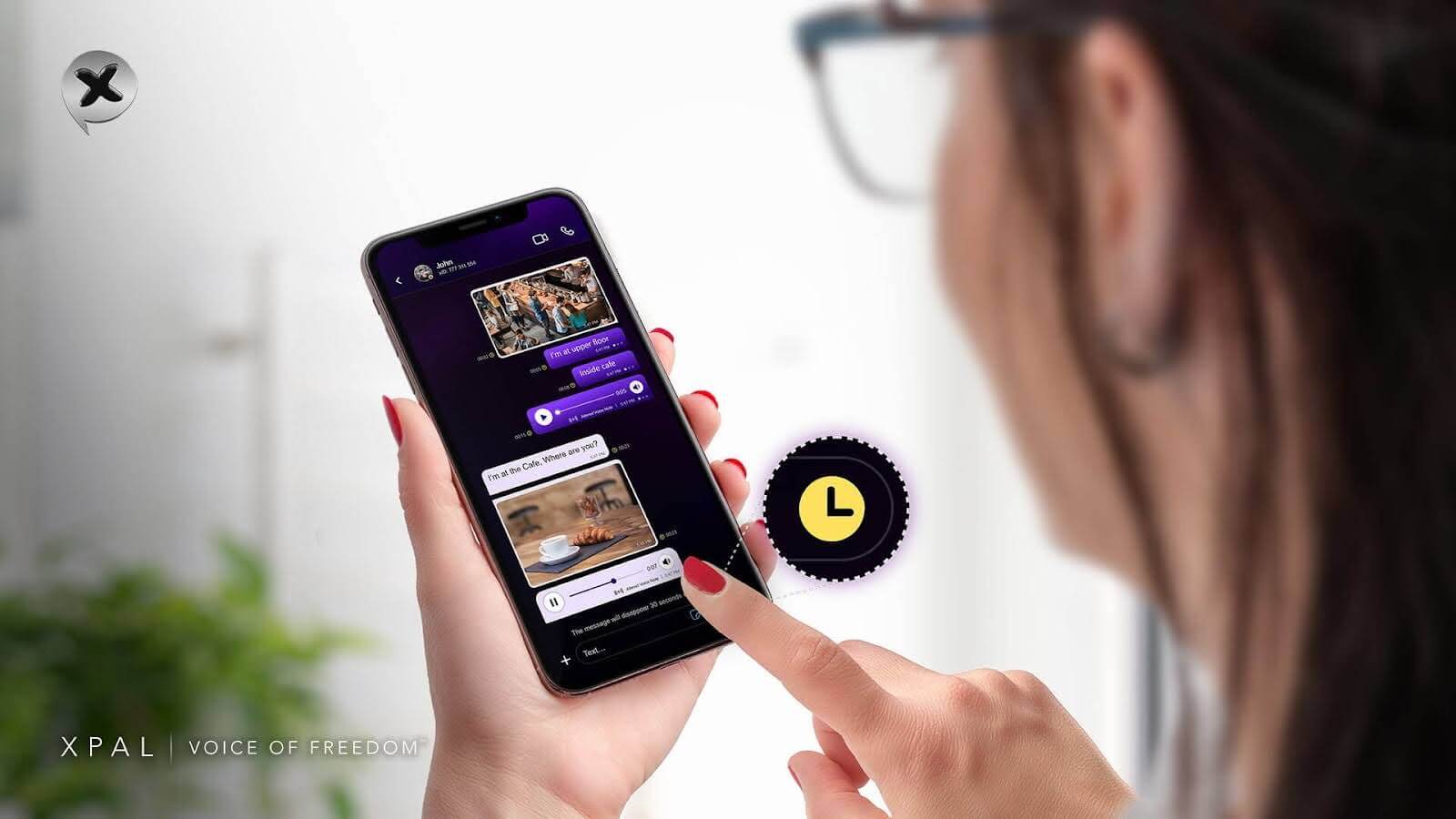
| Step 6: Reading Messages | Old chats stay available | Flicker deletes messages after a time, or Total Wipeout™ removes all |
| Step 7: Saving Data | Chats stay stored on the device | Terminate removes chats from both sides |
| Step 8: Tracking You | Contacts and activity reveal connections | No contact access, identity stays separate |
| Step 9: Media Sharing | Photos may contain hidden data | Photo & Video Distiller™ removes metadata |
| Step 10: Long-Term Access | Sessions can stay active for a long time | Data and chats don’t stay permanently |
Nonetheless, with Secure Communication, xPal also neutralizes entire categories of real-world compromise conditions. The goal is not to claim perfection, but to reduce the impact of failure in any single area by ensuring no single point of compromise can fully expose the system.
Let’s understand!
xPal: Threat → Mechanism → Protection Layer → Outcome
| Threat Scenario (What can happen) | How it happens | Protection (xPal) | Result (What the user gets) |
|---|---|---|---|
| Someone forces you to unlock your phone | You are pressured to show your data | Decoy PIN (Hidden Mode) | A fake/empty account is shown instead |
| Messages are intercepted | Hackers try to read messages in transit | End-to-End Encryption | Messages stay private and unreadable |
| Servers get hacked | Data stored on servers is exposed | No message storage (auto-delete) | No past messages exist to leak |
| Photos reveal hidden info | Images contain location/device data | Photo & Video Sanitizer™ | All hidden data is removed |
| Your identity gets linked | Phone/email connects to your account | xID system (no phone/email) | Your real identity stays hidden |
| App accesses your contacts | Contact list gets collected | No contact access | Your contacts remain private |
| Unknown people in groups | Strangers can see your identity | Limited xID visibility | Only trusted contacts see your ID |
| Someone takes screenshots | Chats get captured secretly | Screenshot restrictions (Android) | Less risk of silent copying |
| Someone opens your phone offline | Device accessed without internet | Offline Lock™ | Chats cannot be viewed offline |
| Your device is lost | Someone tries to use your account | Remote Wipeout™ | Data erased from that device |
| Someone records your screen | Screen recording without you knowing | Capture alerts | You are aware of it |
| Messages get shared outside | Someone forwards your chats | Terminate™ Mode | The entire chat was deleted from both sides |
| Chats stay forever | Old messages remain stored | Flicker™ (disappearing messages) | Messages delete automatically |
| Group messages don’t sync | Not everyone sees/deletes messages | Controlled delete system | No confusion or broken chats |
| Payment info gets exposed | Payments linked to identity | Encrypted payment confirmation | No personal billing data stored |
| Account tied to identity | Personal info required to sign up | No personal data required | Pseudonymous identity |
| Data requested by authorities | Servers hold user data | No storage + encryption | Nothing available to share |
| App tracks your behavior | Usage data collected | No tracking policy | No monitoring or profiling |
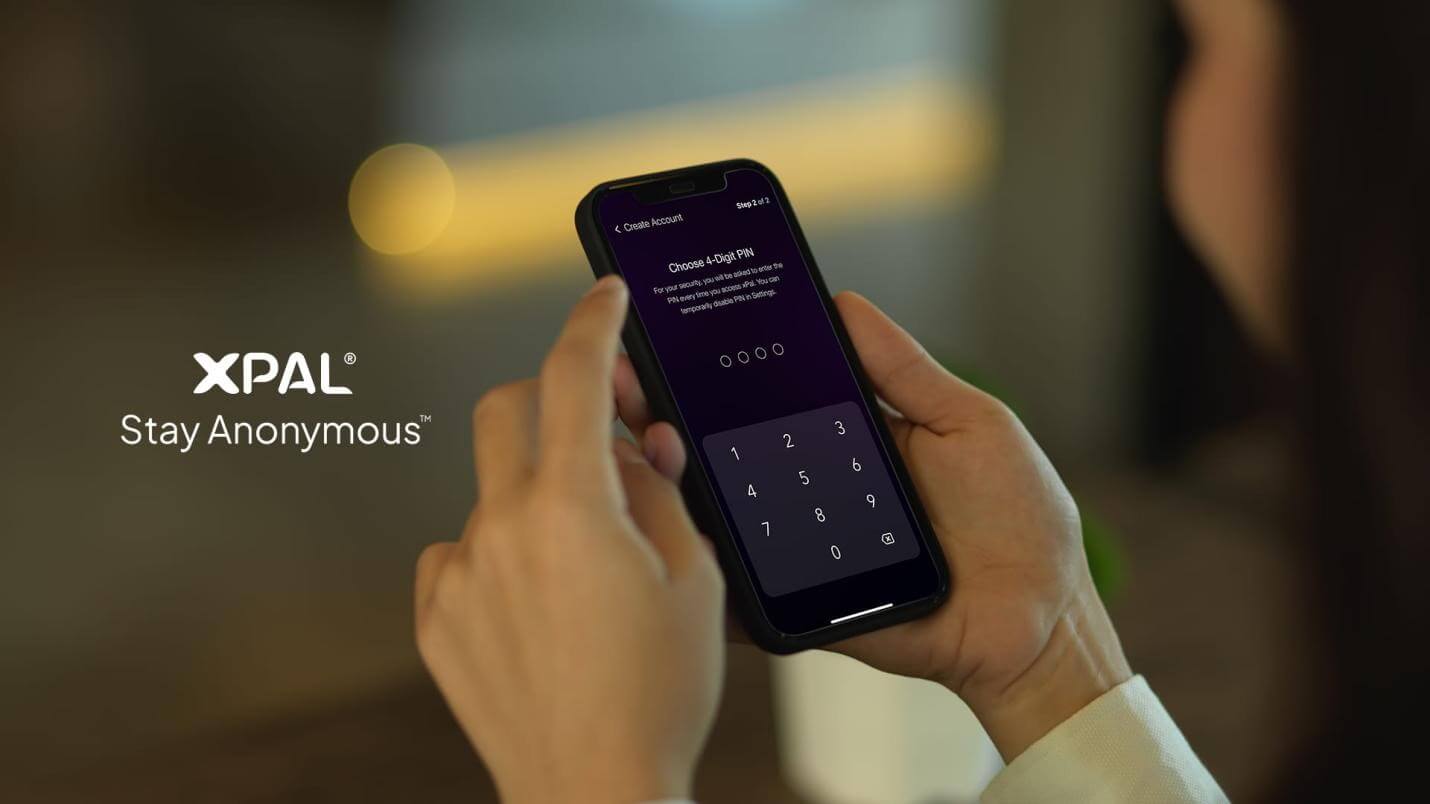
| Someone guesses your PIN | Tries to break into your account | Secure PIN system | Access is blocked |
FAQs
1. Does xPal work normally if my internet keeps switching?
Yes, the xPal anonymous texting app is designed to handle changing networks without breaking sessions.
2. Will xPal privacy slow down my messaging experience?
No, most security processes run in the background.
3. Can I use xPal on multiple devices at the same time?
Yes, but each session is handled separately for safety.
4. Is there any setup required for xPal security features?
No, most protections are built in by default.
5. What if I use multiple xPal accounts?
Each one of the xPal anonymous text app accounts is handled independently.
6. Can someone misuse my old login attempts in xPal?
Old attempts lose value quickly due to session changes.
7. Does xPal depend heavily on passwords?
No, anonymous text app access is not only controlled by passwords.
8. What if I log into my xPal account from two places at once?
Both sessions are treated separately and managed independently for secure private communication.
9. Does xPal need constant updates to stay secure?
Core security is built into the xPal system design itself.
10. Can xPal work offline?
Secure messaging needs the internet, but session rules remain consistent.
11. Does xPal mean it’s 100% safest messaging app?
No! The goal is to limit damage, not claim perfection.
12. Why not just use 2FA and strong passwords?
Those help, but most real online security issues happen after login, not before it.
13. Is xPal useful for normal people or just security geeks?
Normal users probably benefit more from the xPal anonymous texting app, because they don’t think about these data security and privacy cases daily.
14. Doesn’t xPal sound like too much for simple chatting?
Maybe for some people! But breaches usually don’t feel important until they happen.