xPal vs Signal: Best Secure Messaging Platforms Compared
Secure messaging platforms have become part of daily life, and it has been decades since the concept was put into practice as an increasingly well-known form of communication.
However, now, more than just exchanging texts, messaging platforms are seen for their ability to safeguard user conversations and identities. Signal and xPal are both privacy-focused and encrypted messaging apps. Although they both employ strong encryption, they are made for distinct user categories and privacy requirements.
Strong security is indeed provided by these two popular privacy-focused apps, xPal vs Signal, but each takes a different approach to privacy, identity, and features.
xPal vs Signal: Two Secure Apps, Two Very Different Levels of Control
| Category | xPal | Signal |
|---|---|---|
| Registration | Offer a unique 9-digit xID™, which doesn't require a phone number or email | Phone number required for registration means identity is tied to real life |
| Data Collection | No personal data collected | Minimal data collection: phone number is required |
| Availability | Available on both Android and iOS phones and desktops | Available on both Android and iOS phones and desktops |
| Pricing | Free + Gold Membership: $5.00 per month, $39.99 per year, and $99.99 (limited time offer) per lifetime (transferable between xIDs) | Completely free; supported by donations |
| Messaging | End-to-end encryption is used | By default, end-to-end encryption is used (Signal Protocol) |
| Advanced Security | Has Reverse PIN deletion of all chats and media (local and group) | Strong encryption and minimum server data; open source Signal Protocol |
| Voice & Video calls | Secure audio calls available. Secure video calls available (Gold users unlimited, free plan limited) | Unlimited encrypted audio and video calls are routed via Signal infrastructure |
| Business/Professional Use | Used by teams, activist high-risk users, closed networks, and secure business communication | Journalists, NGOs, and activists use it; it can be used for professional purposes |
| Media Sharing | Offering HD video and photos, self-destruct options, metadata removal (photo and video distiller™), and download restrictions | Encrypted media exchange, pictures, videos, GIFs, and files for free can be shared |
| Monetization and Payment | Advanced functions are supported by Gold membership; a free version is available. No data monetization, no ads or trackers | Donations only; no tracking, advertisements, or premium levels |
| Data Control & Account Deletion | Complete deletion at any time; messages, media, and chats can be completely deleted from all participants' devices | Accounts can be deleted; however, messages remain on recipients' devices |
| Group messaging | Up to 100 members with the Gold plan. Free Plan has 50 members | Encrypted group chats supported; size limit is up to 1000 members. Group calls supported for up to 50 people |
| Legal and Compliance | GDPR/CCPA compliance, user-controlled deletion, and encrypted storage and transfer | U.S.-based nonprofit; complies with applicable laws; minimal data available to disclose |
| Distinctive Features | Complete Wipeout™, Terminate™ Mode, Decoy PIN, Flicker™ Mode, Offline Lock™, multiple xIDs, HD media controls, metadata removal, and Remote Wipeout™ | Free voice and video calls, stories, disappearing messages, Signal Protocol, optional usernames, sealed sender, industry trust, and nonprofit governance |
| Transparency and Open Source | The application is audited, security procedures are explained, and it is not entirely open-source | Completely open-source, Signal Protocol is widely used |
| Children and Safety | Extreme privacy protection, no personal data collection, and parental supervision are advised | No advertisements or profiling; parental supervision is advised |
| Support & Reliance | Offline security, no backup options, and support are all available | Documentation, regular updates, and community support |
A Comprehensive Breakdown of xPal and Signal
xPal
Maximum control and anonymity are the main goals of xPal, a privacy-focused messenger. It is intended for those who wish to communicate without disclosing any personal information. In xPal, privacy is more than just a word; it is the basis of how messages and accounts function.
xPal has free and gold plans with the same level of anonymity.
Signal
Signal prioritizes safe communication for regular users. It maintains simplicity and ease of use while providing strong privacy. It functions similarly to a standard messaging program, but encryption is enabled by default.
Signal Private Messenger is a nonprofit that doesn't track users, display advertisements, or sell data.
Sign-Up and Identity
xPal
- No phone number required
- No email
- No true name
- Employs a distinct nine-digit xID
- No access to contacts
Signal
- No email
- Needs a phone number to sign up
- Uses calls or SMS to confirm
- The primary account identifier is the phone number
xPal: No phone number is needed. Rather, you receive a special 9-digit xID that serves as a passport for international secure communication. Without exposing a phone number or email address, you can text, make audio calls, and make video calls without disclosing any personal information.
Signal Private Messenger: In order to register, a phone number is needed. Your messages are still encrypted, but this connects your account to your physical identity.
Call and Message Security
xPal
- Encrypts all communications from beginning to end
- xPal is unable to view or access any messages
- After delivery, messages are removed from servers
- After 36 hours, undelivered messages are removed
Signal
End-to-end encryption is used for:
- Messages
- Voice calls
- Making video calls
- Signal is unable to listen to calls or read messages
- The user's device stores messages
- Messages are briefly stored for delivery
Data and Metadata
xPal
xPal Private Messenger makes it clear:
- No collection or keeping of:
- Phone numbers
- Emails
- Actual names
- IP addresses
- Exact locations
IP addresses are not saved; they are just used to connect at the network layer.
- Only keeps:
- Screen Name
- Nine-digit xID
- Date of registration
- Timestamp of last login
- System of operation
- Country (not exact location)
Signal
Although Signal's privacy-focused messenger is intended to restrict data collection, some data is nevertheless involved:
- A phone number is necessary
- Push tokens, keys, and random authentication tokens
- Encrypted profile information
- Hashed contacts are used in contact finding
- Encrypted metadata may pass through servers
- Built to never collect or store any sensitive data
- For operational purposes, data may be moved to the US or other countries
Media & Messaging
xPal
- Unlimited text messages that are encrypted
- Unlimited sharing of HD and compressed images
- Unlimited sharing of HD and compressed videos
- No GIFs
- Restrict media downloads
- Messages that disappear (Flicker™)
Signal
- Text messages
- Voice messaging
- Images and videos
- GIFs
- Sharing files
- Stickers with encryption
Voice and Video Calls
xPal
- Unlimited phone Secure Communication
- Unlimited safe video calls are included in Gold Plans
- By default, encrypted
Signal
- Safe phone conversations
- Secure video conversations
- Crystal-clear encrypted voice & video calls
- Group calls supported for up to 50 persons
Group Chats
xPal
- Supported group chats
- Each group may have up to 100 members in the Gold plan
- Absence of contact synchronization
Signal
- Supported group chats
- Stay connected with up to 1,000 people
- Simple to use
- Designed for teams and families
Additional Privacy Features
xPal
- Flicker™ mode
- Terminate™ mode
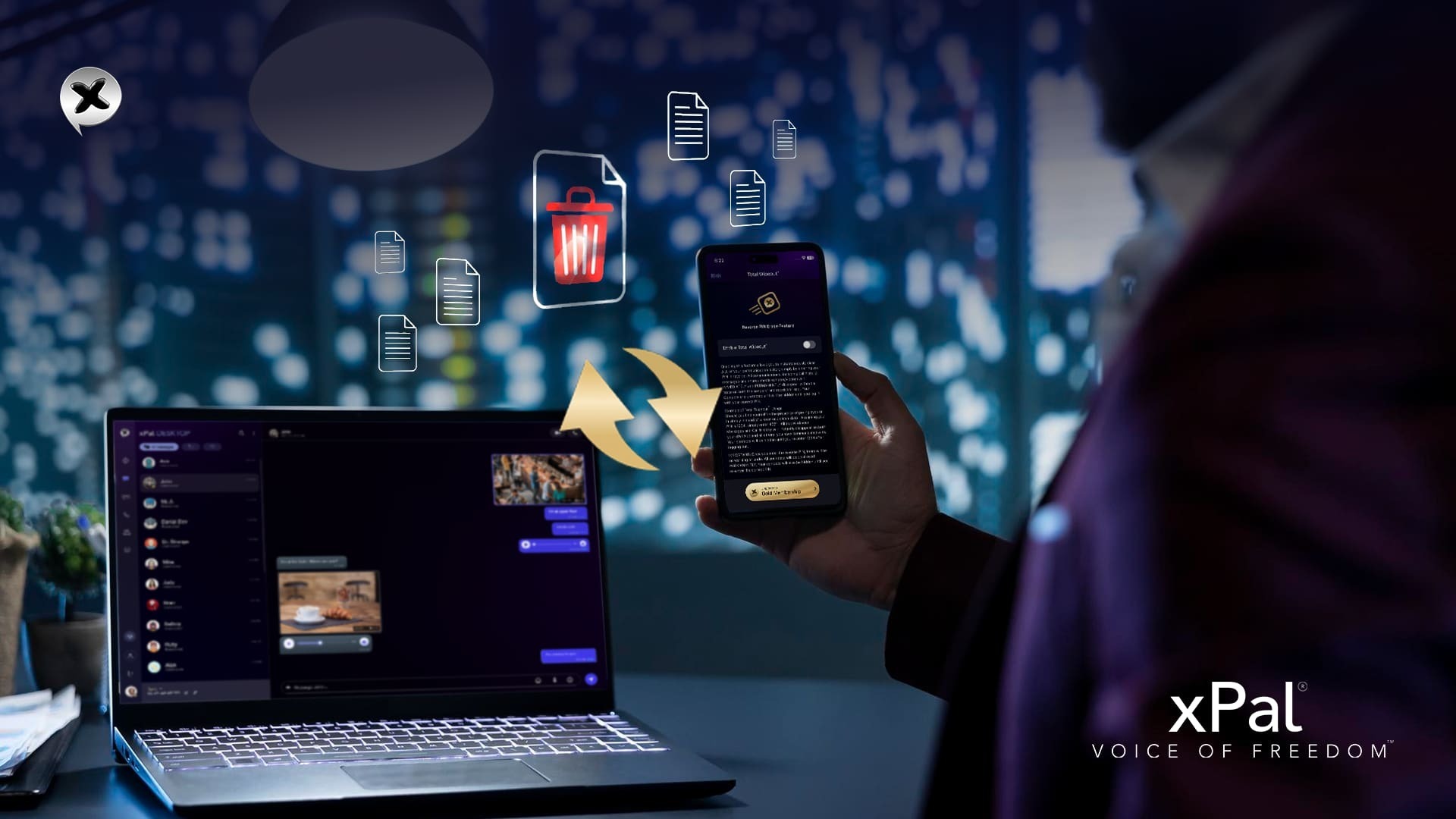
- Total Wipeout™ (PIN reversal)
- Remote Wipeout
- Decoy PIN
- Offline lock
- Several xIDs on a single device
Users who want strong security in high-risk scenarios are the target audience for these Secure messaging platform features.
Signal
- Messages that disappear
- PIN for registration lock
- Options for screen security
- Image, text, and video Stories that disappear after 24 hours
- Free voice and video calls
- Group calls supported for 50 people
- Create a username to connect with others without sharing phone numbers
Revenue, Tracking, and Ads
xPal
- No advertisements
- No tracking by third parties
- The app has paid memberships and a free plan
- App stores manage payments
- Personal payment information is not sent to the xPal encrypted messaging app
Signal
- No advertisements
- Absence of trackers
- Free to use
- Funded by donations
- Nonprofit organization
Legal and Privacy Rights
xPal
- GDPR-compliant
- CCPA-compliant
- Enables users to remove all data
- No sharing or selling of personal information
Signal
- Located in the United States
- In accordance with US legislation
- Clear Terms of Service and Privacy Statement
Pricing
xPal
- There is a free version
- Gold plans:
- $5.00 per month
- $39.99 a year
- $99.99 for life (limited offer)
- Memberships can be transferred between xIDs
Signal
- Totally free
- Donations are optional
Transparency and Audits
xPal
DEKRA Testing and Certification, App Defense Alliance/CASA, MASA Certification, and OWASP Security Standards have certified and audited xPal, guaranteeing thorough third-party verification of security and privacy claims.
For users who want pseudonymous messaging, no personal identity requirement, and sophisticated privacy controls, xPal Private Messenger is ideal.
Signal
The Signal Secure messaging platform is ideal for people who don't mind using a phone number and want strong privacy with ease.
Open-source safety protocols are publicly accessible.
Although they do it in different ways, both Secure messaging platforms respect privacy. How much control and anonymity a user requires will determine which option is best.
FAQs
1. How is the xPal Secure messaging platform different from Signal at sign-up?
Signal requires a phone number. xPal messaging app requires no phone number, no email. Just a private xID.
2. Does Signal strip metadata from shared media automatically?
Signal encrypts media. xPal removes hidden metadata before encryption.
3. Which app is built for "nothing left behind" scenarios?
xPal Private messenger with advanced privacy controls like Terminate™, Flicker™, Total Wipeout™, and Remote Wipeout™, combined.
4. If Signal is encrypted, why would I need xPal?
Encryption protects messages. xPal protects identity, device compromise, and emergency scenarios. Signal does not address all three.
5. When should I choose xPal end-to-end encryption over Signal?
When encryption alone is not enough. When you do not want to link identity, want privacy measures, and controlled data destruction.